




29 May 2026
Most families find out about the HPV vaccine too late, after a daughter has turned 18 or after a Pap smear flags something unusual. The cervical cancer vaccine programme exists precisely to prevent that situation, but only if people act during the right window. This guide covers the HPV vaccine price in India in 2026 across public and private channels, who qualifies under the HPV vaccination age limit, where to find the Cervavac vaccine availability, and why IOCI's oncology team treats early vaccination as a clinical priority, not a routine checkbox.
How HPV becomes cervical cancer — and why the gap matters
HPV is not a rare infection. Most sexually active people encounter it at some point, and most clear it without ever knowing they were infected. The problem is the minority of cases where a high risk strain, primarily HPV 16 or HPV 18, establishes a persistent infection in cervical tissue. Over years, sometimes a decade or longer, that persistent infection drives abnormal cell changes that eventually become invasive cancer.
That long timeline is actually good news for prevention. There is a wide window between first exposure and cancer, wide enough that vaccination, screening, or both can interrupt the process at multiple points. India loses roughly 77,000 women to cervical cancer every year. The majority of those deaths follow a path that vaccination, started at the right age, could have blocked entirely.
Risk goes up with factors like a weakened immune system, early HPV exposure, infrequent or no cervical screening, and limited access to preventive care. None of these are fixed all of them respond to the right intervention at the right time.
HPV vaccination age limit in India — the window is wider than most people think
The HPV vaccination age limit in India question comes up at nearly every preventative consultation. Parents assume they have missed the window if their daughter is already a teenager. That assumption is usually wrong.
The strongest immune response happens between ages 9 and 14. Girls vaccinated in this range need only two doses the immune system at this age produces antibody levels high enough that a third dose adds nothing clinically meaningful. This is the primary target for the national immunisation programme.
From age 15 onwards, a three-dose schedule is required, given at months 0, 2, and 6. Routine vaccination is recommended up to age 26. Women between 27 and 45 should discuss vaccination individually with a doctor; the benefit depends on prior HPV exposure, and blanket recommendations do not apply cleanly in this age group. Above 45, vaccination is generally not advised unless specific clinical circumstances exist.
Boys are not included in India's national programme but can receive the vaccine at private centres. HPV causes head and neck cancers, anal cancer, and penile cancer in men, and vaccinated males also reduce transmission to their partners.
Cervavac and what its arrival changed
Until 2023, India's HPV vaccine market was entirely imported. Gardasil and Cervarix were priced at rates that kept them out of reach for much of the population. The Serum Institute of India changed that with Cervavac, a quadrivalent vaccine targeting HPV strains 6, 11, 16, and 18. It received WHO prequalification in 2024, confirming it meets international manufacturing, safety, and efficacy standards.
Cervavac vaccine availability in India now covers two distinct channels. Under the national immunisation programme, it is offered free of charge to girls aged 9 to 14 at government health centres making it one of the few countries to offer free HPV vaccination at scale. Private hospitals, oncology centres like IOCI, and urban clinics stock it for patients outside the government programme's age range or those who prefer a private setting with a specialist consultation.
Two other options remain available: Gardasil 4 covers the same four strains as Cervavac, and Gardasil 9 extends coverage to nine strains, adding HPV 31, 33, 45, 52, and 58, which together account for a further 15–20% of cervical cancer cases. Whether Gardasil 9's broader coverage justifies its higher cost depends on the individual; your oncologist can help make that call based on age and exposure history.
HPV vaccine price in India 2026 — public vs private
The HPV vaccine price in India in 2026 depends entirely on which channel you access. Through the government programme, Cervavac is available at no charge for girls aged 9–14. Outside that programme for older adolescents, adults, boys, or those using private facilities, you are looking at private market pricing.
Cervavac is the most affordable option in the private market. Gardasil 4 sits in a mid-range bracket. Gardasil 9, with its broader strain coverage, carries the highest per-dose cost, and at three doses the full course represents a significant out of pocket spend for most families. Some health insurance policies now cover HPV vaccination. It's worth confirming with your insurer before booking.
IOCI provides transparent information about current vaccine pricing during consultations, so families can plan the full course cost before committing.
Vaccination is not the whole answer — screening still matters
The cervical cancer vaccine India programme reduces risk significantly, but no vaccine covers every cancer causing HPV strain. Vaccinated women still need regular cervical screening Pap smears from age 21 or HPV DNA testing from age 30, depending on individual history. Combining vaccination with regular screening offers substantially better protection than either approach alone.
Women who were not vaccinated as adolescents and are now adults should not conclude vaccination is pointless. If they have not been exposed to every strain the vaccine targets, which is unknowable without testing, vaccination still provides partial benefit. The conversation is worth having with a specialist rather than skipping entirely.
FAQs
Can a woman who already has HPV get vaccinated?
Yes, with an important caveat. The vaccine will not treat an existing infection or reverse damage already done. It can still protect against strains not yet encountered. Your doctor will assess whether vaccination makes clinical sense based on your individual situation.
What is the difference between Cervavac and Gardasil 9?
Cervavac covers four HPV strains (6, 11, 16, and 18). Gardasil 9 covers nine strains, adding five more that together account for roughly an additional 15–20% of cervical cancer cases. Gardasil 9 offers broader protection at a higher per-dose cost.
Is the HPV vaccine safe for children as young as 9?
Yes, the 9 to 14 age group has the longest safety record and the strongest immune response. Starting early is clinically preferred, not just convenient.
Does completing only one or two doses of a three dose schedule offer any protection?
Partial vaccination provides partial protection, but it is not a substitute for the complete course. If doses were missed, the course can be completed there is no need to restart from the beginning.
Why IOCI for HPV vaccination
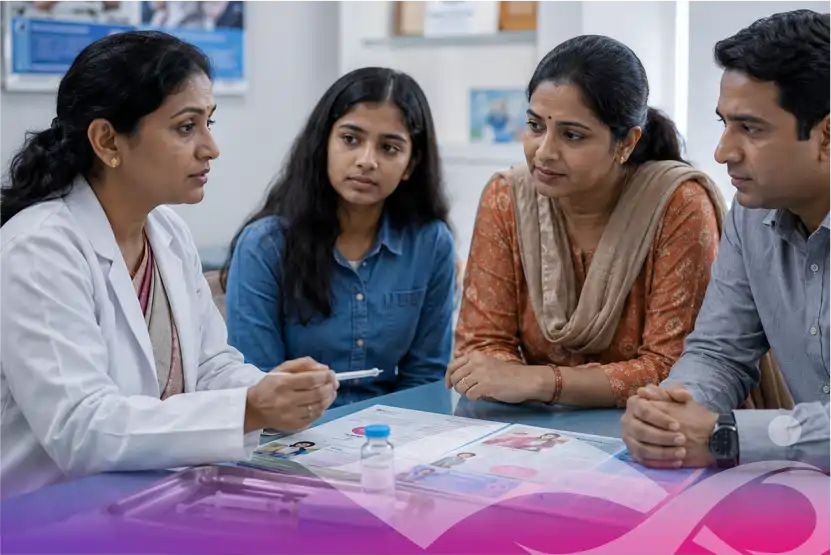
IOCI's preventive oncology team does not treat HPV vaccination as a walk in procedure. Every patient receives a consultation that covers age appropriate vaccine choice, full course scheduling, screening timeline, and any individual risk factors that change the standard recommendation. The team that advises on vaccination also manages cervical cancer at every stage, which means their guidance comes from direct clinical experience, not just published guidelines.